

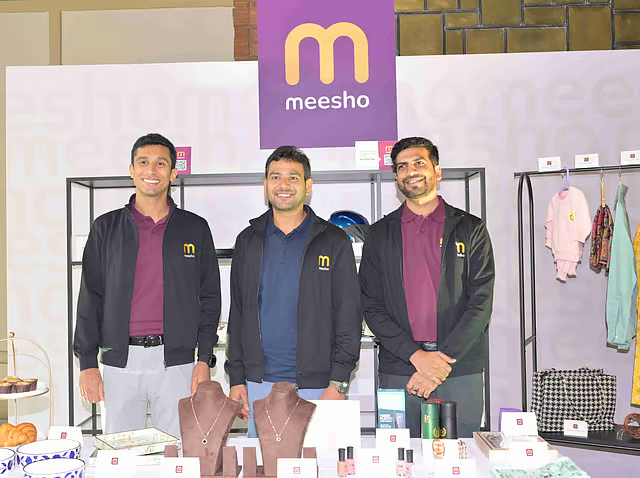
Meesho was not the first thing Vidit Aatrey and Sanjeev Barnwal built. The two IIT Delhi graduates started in 2015 with Fashnear, a hyperlocal fashion delivery app modelled loosely on what was working elsewhere: see something in a nearby shop, order it, get it delivered. It failed quickly. But while it was failing, the founders noticed something more interesting than their own product. Small shopkeepers and individual resellers were already running businesses on WhatsApp, photographing products, forwarding them to contacts, collecting payments, and arranging deliveries by hand.
Commerce was happening. It just was not happening on e-commerce platforms.
The platforms had been built for a different India: English-first, metro-centric, organised around branded goods and customers with credit cards. The people selling on WhatsApp, many of them women running businesses from home, and the people buying from them, price-conscious customers in smaller cities, had been designed out. Vidit and Sanjeev rebuilt their company around them. The name they chose said everything about the intent: Meesho, from meri shop. My shop.
Built for Bharat, From Day One
The conventional wisdom in Indian e-commerce was that the next wave of growth would come from converting metro consumers to higher-value purchases. Meesho bet the opposite way: the real market was the hundreds of millions of first-time internet users in Tier 2, Tier 3, and Tier 4 India, and serving them required rebuilding the model, not translating it.
That meant unbranded and regional products, because that is what value-conscious customers actually buy. It meant simplicity in the interface and trust built through social discovery, because that is how commerce already worked in non-metro India. And it meant an unusual structural choice: zero commission for sellers. Meesho would make money from services around the transaction, advertising, fulfilment, seller tools, rather than taxing the transaction itself. For a small seller deciding whether to go online, the difference between some commission and none was the difference between hesitation and yes.
The company evolved from its social commerce roots into a full-stack e-commerce marketplace, investing in the technology, logistics, and operational systems needed to serve scale without compromising affordability. The discipline held through the transition. Meesho prioritised capital efficiency and operational rigour through a period when much of Indian e-commerce was spending its way to growth.
The Numbers Behind the Thesis
Today, Meesho connects more than 230 million consumers with over 700,000 sellers across the country. Approximately 88% of its users come from outside India's top eight cities, the cleanest evidence available that the founding bet was right. The growth was not in converting the converted. It was in the India that existing platforms had treated as an afterthought.
For the sellers, the platform has become infrastructure. Small entrepreneurs who once ran informal WhatsApp businesses now operate at national scale, with formal payments, logistics, and a customer base no individual reseller could have reached alone.
Seventy-Nine Times Subscribed
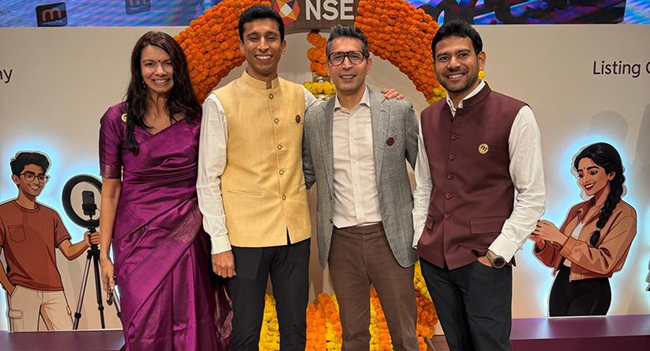
In December 2025, Meesho listed on the NSE and BSE. The numbers were emphatic. The ₹5,421 crore IPO was subscribed 79 times overall. The institutional portion was subscribed 120 times, anchored by SBI Mutual Fund, GIC, Fidelity, and BlackRock. The stock listed at ₹162.50, a 46% premium to the issue price, one of the strongest debuts among large consumer internet IPOs in recent years.
A 120x institutional book is not enthusiasm. It is the most diligence-intensive category of investor concluding, at scale, that a business built on affordability and access can also be built to last.
Meesho is the second company from Trifecta Capital's growth equity portfolio to go public, after ixigo. The pattern between the two is not a coincidence. Both companies were built for the India beyond the metros, both prioritised capital discipline before the market demanded it, and both proved that the largest opportunities in Indian technology sit with the users everyone else deprioritised.
Access as a Design Principle
Meesho's evolution mirrors a broader shift in India's digital economy: from concentrated adoption to widespread participation, from access as an afterthought to access as a design principle.
That shift did not happen on its own. It happened because a failed fashion delivery startup paid attention to what shopkeepers were doing on WhatsApp, and spent the next decade building for them.
Trifecta Capital is proud to have partnered with Meesho as it built for Bharat at scale. Congratulations to Vidit, Sanjeev, and the entire Meesho team on this listing. The platforms that win the next decade of Indian commerce will be the ones designed for everyone. Meesho got there first.